FDA 483 Observations in Medical Devices: 3-Year Data Analysis
A deep dive into 3-year FDA 483 observations. Let's learn from the past and improve in the future. It is the time to strengthen our Quality Management System (QMS).
QUALITY & REGULATORY
Mingyue Feng
3/27/20254 min read
Introduction: Why FDA 483 Observations Matter
If you’ve ever been through an FDA inspection, you know the moment the investigator hands over an FDA Form 483 can be stressful. A 483 observation means the FDA has found compliance issues that need attention—and while it’s not an immediate penalty, ignoring it can lead to warning letters, import holds, or even product recalls.
For medical device companies, these observations aren’t just about paperwork; they can delay product launches, increase costs, and damage reputations. That’s why I’ve taken a close look at three years of FDA 483 data—to help you see what’s changing, where the FDA is focusing, and how you can stay ahead of compliance challenges.
1. Where the Data Comes From & How I Analyzed It
The data comes from the FDA’s publicly available inspection database (FDA 483 Reports) and focuses on Quality System Regulation (QSR) 21 CFR Part 820 sub-elements cited in inspections from FY 2022 to FY 2024. (Download the 3-year data here)
How We Analyzed the Data:
• Extracted and categorized 483 observations related to QSR 820 from FDA’s inspection database.
• Identified the most frequently cited sub-elements for each fiscal year.
• Measured year-over-year changes to highlight emerging trends.
Data Limitations:
• Not all FDA 483 observations may be immediately published.
• The focus of inspections can shift due to evolving regulatory priorities.
• Some citations may be subjective, depending on the interpretation of individual investigators.
2. Key Findings from the Data (FY 2022–FY 2024)
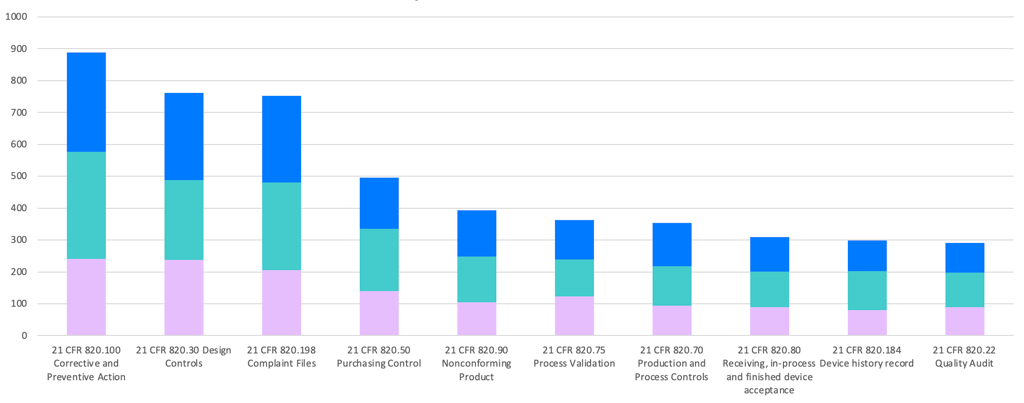
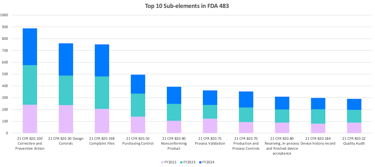
The Top 10 483 Obs.
1️⃣ CAPA (820.100) – Corrective and Preventive Actions continue to top the list. Many companies struggle with documenting and closing CAPAs effectively.
2️⃣ Design Controls (820.30) – Common issues include inadequate risk management, verification, and validation.
3️⃣ Complaint Handling (820.198) – The FDA is keeping a close eye on post-market surveillance and adverse event reporting.
4️⃣ Purchasing Controls (820.50) – Problems with supplier quality management and purchasing documentation are increasingly flagged.
CAPA and complaint handling have been problem areas for years, so it’s no surprise they’re still leading citations. What’s more interesting is the growing focus on supplier controls, which could signal tighter oversight of supply chain transparency.
I've posted an article regarding how to establish the CAPA system and harness it for actual improvement instead of just a "compliance checkbox". (Read here)
3. What’s Getting Worse? The Biggest Increases in Observations
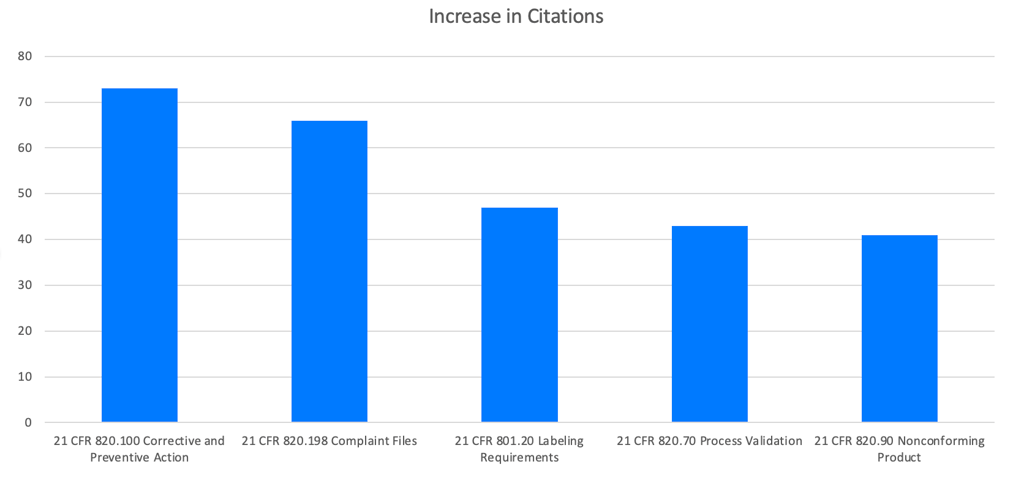
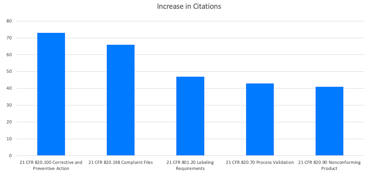
Sub-Elements with the Most Significant Increase (FY 2022 to FY 2024)
Some areas have seen a sharp rise in citations over the past three years. The biggest increases include:
• Complaint Handling (820.198) – The FDA is pushing harder on how companies track, investigate, and respond to complaints.
• Labeling Compliance (21 CFR 801.20) – There’s a noticeable uptick in citations related to UDI (Unique Device Identification) and overall labeling accuracy.
• Supplier Controls (820.50) – With supply chain disruptions and increased outsourcing, the FDA is scrutinizing how manufacturers qualify and monitor suppliers.
The labeling issue is particularly interesting. It’s likely tied to the FDA’s growing focus on UDI compliance, which is meant to improve device traceability and patient safety. If your labeling processes aren’t airtight, now’s the time to take another look.
4. What This Means for the Future
So, where is FDA enforcement heading? Based on the trends, here’s what I see coming:
• More Focus on Labeling & UDI Compliance – If labeling issues keep trending up, expect stricter audits on device identification and traceability.
• CAPA & Complaint Handling Will Stay Under the Microscope – The FDA isn’t letting up on these areas, so strong root cause analysis and timely CAPA closure will remain essential.
• Supplier Management Will Be a Bigger Deal – If you’re not already closely monitoring your suppliers, now is the time to tighten those processes.
One other thing to watch: the transition from QSR to the new ISO 13485-based QMSR regulation could shift how inspections are conducted in the future. And with the FDA exploring AI-driven inspections, compliance expectations may evolve faster than before.
5. What We Can Do Now
If you want to avoid 483 headaches, here’s what I recommend focusing on right away:
✅ Audit your CAPA and complaint-handling processes to make sure you’re fully compliant.
✅ Review your supplier controls and purchasing documentation—the FDA is looking at these more closely.
✅ Check your labeling and UDI compliance—especially if you’ve had past issues in this area.
✅ Prepare for AI-driven inspections by strengthening your data integrity and documentation practices.
The more proactive you are, the less likely you are to be caught off guard when the FDA shows up.
6. Stay Ahead of FDA Compliance Challenges
If you’re serious about avoiding 483 observations, don’t wait until your next inspection to take action. Start auditing your systems now and use these trends to strengthen your compliance strategy.
📩 Want to stay updated? Subscribe to my blog for regular insights on FDA compliance
💡 Need expert help? Reach out for consulting “How to Prepare for an FDA Inspection” to ensure your QMS is FDA-ready.
Reference:
1. FDA Inspection Observations Database
2. FY22 - FY 24 observations summary of devices
Related reading: Beyond Compliance: Leveraging CAPA for Actual Improvement
Published on: Mar. 27, 2025